
If you weigh 70kg (154 lbs) and want to know exactly how much protein you need — the answer depends on your goal, your activity level, and whether you are trying to lose fat, build muscle, or simply stay healthy. This guide gives you the exact numbers with real examples so you can start hitting your target today.
⚡ Quick Answer for a 70kg (154 lbs) Person
Minimum (sedentary)
56g
0.8g per kg
Fat Loss
112g
1.6g per kg
Muscle Gain
140g
2.0g per kg
Athlete
168g
2.4g per kg
Why Protein Matters at 70kg
At 70kg your protein needs are higher than the government minimum suggests — especially if you are active. Here is what protein actually does for your body:
- Builds and repairs muscle — every gym session creates micro-tears in muscle that protein repairs and makes stronger
- Keeps you full — protein triggers satiety hormones more powerfully than carbs or fat — essential for fat loss
- Burns calories digesting it — 20-30% of protein calories are burned just during digestion (thermic effect)
- Preserves muscle during fat loss — without enough protein a calorie deficit causes muscle loss alongside fat loss
- Supports immune function — antibodies are proteins — chronic low protein weakens immune response
Source: Stokes T, et al. Recent Perspectives Regarding the Role of Dietary Protein for the Promotion of Muscle Hypertrophy. Nutrients. 2018. NIH/PubMed.
Protein Targets by Goal — 70kg Person
Fat Loss — 112g to 126g per day
1.6g to 1.8g per kg (0.73g to 0.82g per lb)
During a calorie deficit higher protein is essential. Research consistently shows that 1.6g per kg or higher dramatically reduces muscle loss during fat loss — meaning more of the weight you lose comes from fat rather than muscle.
Muscle Gain — 140g to 154g per day
2.0g to 2.2g per kg (0.91g to 1g per lb)
For muscle building you need enough protein to maximise muscle protein synthesis after training sessions. Research suggests diminishing returns above 2.2g per kg — so there is no need to go significantly higher than this for most people.
General Health / Maintenance — 84g to 112g per day
1.2g to 1.6g per kg (0.55g to 0.73g per lb)
For active adults who are not specifically trying to lose fat or build muscle, this range supports muscle preservation, immune function, and general wellbeing without needing to meticulously track every gram.
How to Hit 112g of Protein Per Day — Real Food Only
You do not need protein supplements to hit 112g of protein at 70kg. Here is how to do it with real food across 4 meals:
| Meal | Food | Protein | Calories |
|---|---|---|---|
| Breakfast | 3 eggs + 150g (5.3oz) Greek yogurt | 33g | 310 kcal |
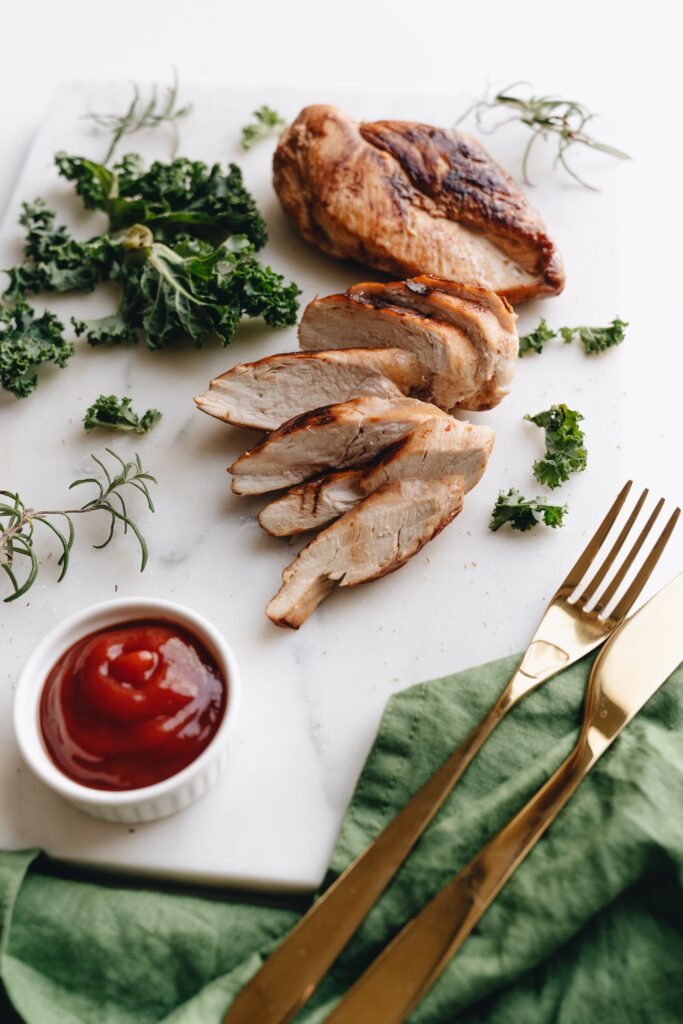
| Lunch | Chicken breast 150g (5.3oz) + salad | 46g | 320 kcal |
| Snack | 100g (3.5oz) cottage cheese + apple | 11g | 178 kcal |
| Dinner | Tuna 120g (4.2oz) + lentils 150g (5.3oz) cooked | 30g | 310 kcal |
Total: 120g protein | 1,118 kcal from protein sources alone — leaving room for carbs, fats and vegetables to complete your daily target.
Protein Content of Common Foods — Quick Reference
| Food | Serving | Protein | Calories |
|---|---|---|---|
| Chicken breast | 100g / 3.5oz | 31g | 165 kcal |
| Tuna (canned in water) | 100g / 3.5oz | 26g | 116 kcal |
| Eggs (whole) | 1 large egg | 6g | 70 kcal |
| Greek yogurt | 150g / 5.3oz | 15g | 90 kcal |
| Cottage cheese | 100g / 3.5oz | 11g | 98 kcal |
| Lentils (cooked) | 100g / 3.5oz | 9g | 116 kcal |
| Salmon | 100g / 3.5oz | 20g | 208 kcal |
| Tofu (firm) | 100g / 3.5oz | 8g | 76 kcal |
| Whey protein shake | 1 scoop (30g / 1oz) | 22-25g | 120 kcal |
| Peanut butter | 2 tbsp (32g / 1.1oz) | 8g | 190 kcal |
Protein Targets by Body Weight — Full Reference Table
For comparison, here are protein targets across different body weights at 1.6g per kg (fat loss) and 2.0g per kg (muscle gain):
| Body Weight | Fat Loss (1.6g/kg) | Muscle Gain (2.0g/kg) | Athlete (2.4g/kg) |
|---|---|---|---|
| 55kg / 121 lbs | 88g | 110g | 132g |
| 60kg / 132 lbs | 96g | 120g | 144g |
| 70kg / 154 lbs | 112g | 140g | 168g |
| 80kg / 176 lbs | 128g | 160g | 192g |
| 90kg / 198 lbs | 144g | 180g | 216g |
| 100kg / 220 lbs | 160g | 200g | 240g |
Common Questions
Is it based on total body weight or lean mass?
For most people using total body weight is simpler and accurate enough. If you have very high body fat (above 30%) using lean mass is slightly more accurate — multiply lean mass in kg by 2.0 to 2.4g instead.
Do I need protein supplements?
No. 112g to 140g of protein per day is achievable through whole food alone for most people. Protein shakes are a convenient option — not a necessity. If you struggle to hit your target through food a whey or plant protein shake can bridge the gap easily.
Does protein timing matter?
Total daily protein matters more than timing. However spreading protein across 3 to 5 meals of 25 to 40g each maximises muscle protein synthesis throughout the day compared to eating most protein in one meal.
Can I eat too much protein?
For healthy adults there is no evidence that intakes up to 2.5g per kg cause harm. Very high intakes (above 3g per kg) over long periods are not recommended for people with kidney disease — always consult your doctor if you have any kidney concerns.
Research reference: A meta-analysis of 49 studies published in the British Journal of Sports Medicine found that protein supplementation significantly augmented gains in muscle mass and strength during resistance training, with effects plateauing at approximately 1.62g per kg per day — confirming that going significantly above this threshold produces diminishing returns for most people.
Source: Morton RW, et al. A systematic review, meta-analysis and meta-regression of the effect of protein supplementation on resistance training-induced gains. Br J Sports Med. 2018. NIH/PubMed.
Calculate Your Exact Protein Target
Use our free Protein Calculator for your personalised daily protein target based on your weight, activity level and goal — works in kg or lbs.
Calculate My Protein Target Free →The Bottom Line
- At 70kg (154 lbs) your protein target ranges from 112g (fat loss) to 168g (athlete) depending on your goal
- The government minimum of 0.8g per kg is the bare survival floor — not an optimal target for active people
- 1.6g per kg is the minimum for anyone exercising regularly regardless of goal
- You can hit your protein target through whole food alone — no supplements required
- Spreading protein across 3 to 5 meals throughout the day is more effective than eating it all at once
References
- Morton RW, et al. A systematic review, meta-analysis and meta-regression of the effect of protein supplementation on resistance training-induced gains. Br J Sports Med. 2018. NIH/PubMed.
- Stokes T, et al. Recent Perspectives Regarding the Role of Dietary Protein for the Promotion of Muscle Hypertrophy. Nutrients. 2018. NIH/PubMed.
📖 Related Articles
Disclaimer: This article is for informational purposes only and does not constitute medical advice. Always consult a registered dietitian or healthcare professional for personalised nutrition advice, particularly if you have kidney disease or other medical conditions.