
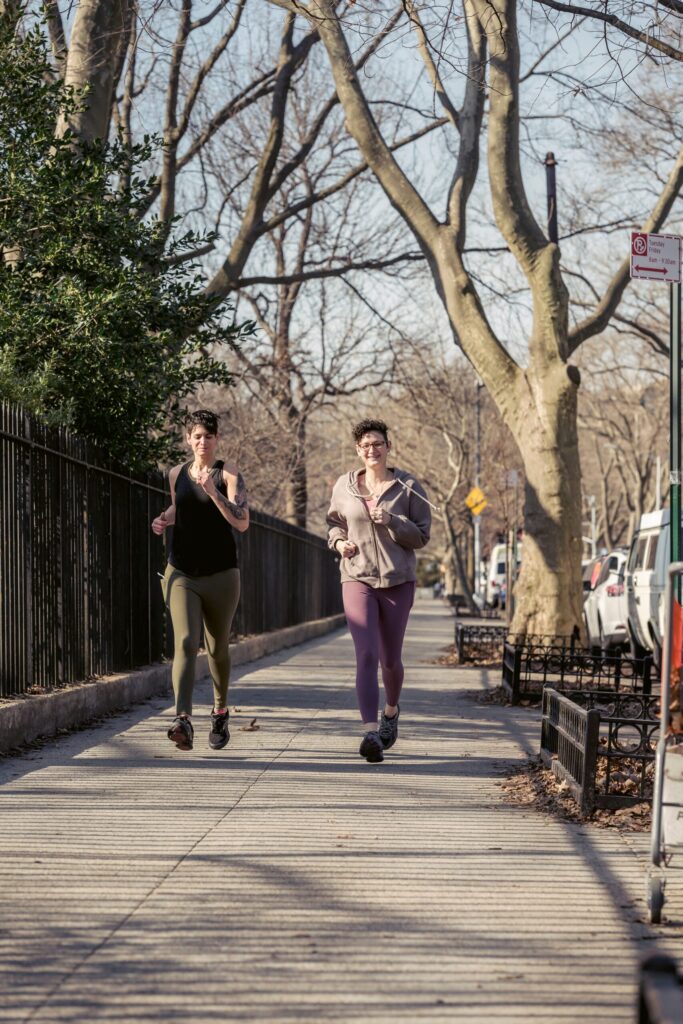
I have to be honest with you — when I first heard about Japanese walking I rolled my eyes a little. Another viral fitness trend with a catchy name and questionable science behind it. But then I actually read the original research. And I changed my mind completely.
This is not a TikTok trend someone invented last week. It is a walking protocol developed by exercise scientists in Japan and validated in a proper clinical trial. And the results are genuinely impressive — especially for anyone over 35 who wants to get more out of their daily walk without running.
Maya — 38F, 160cm (5’3″), Currently 73kg (161 lbs)
Maya had been doing a steady 30 minute walk every day for 3 months. It was working — she had lost 7kg already — but progress had stalled. Her walks felt too easy and she did not want to start running because of her knee. When she discovered Japanese walking she did not change the time she spent walking. She just changed how she walked. The results surprised her.
What is Japanese Walking?
Japanese walking — also called interval walking training or IWT — is an exercise protocol developed by Professor Hiroshi Nose and his team at Shinshu University in Japan. The original research was published in 2007 and has been replicated multiple times since.
The concept is simple. Instead of walking at one steady pace for your entire session you alternate between fast and slow walking in 3 minute intervals throughout the session.
⚡ The Protocol — Simple Version
- 3 minutes of FAST walking — slightly breathless but manageable
- 3 minutes of SLOW walking — comfortable recovery pace
- Repeat 5 times for a 30 minute session
- Do this 4 or more days per week
What the Research Actually Shows
The original Shinshu University study followed 246 middle-aged and older adults over 5 months. Half did interval walking training. Half did moderate continuous walking at the same total duration.
What the interval walking group showed after 5 months:
- Aerobic fitness (VO2 Max) improved by 10% more than steady walkers
- Leg muscle strength improved by 13% more than steady walkers
- Blood pressure reduced significantly more than steady walkers
- Lifestyle-related disease markers improved significantly
- Overall physical fitness scores were meaningfully higher
Source: Nose H, et al. Interval walking training program about bone metabolism, physical fitness and mental health. Journal of Applied Physiology. 2007. NIH/PubMed.
Same time investment. Dramatically better results. Just by changing the intensity pattern.
Why Interval Walking Works Better Than Steady Walking
Most people assume walking at a comfortable pace for longer is the optimal approach. The research suggests otherwise. Here is what is actually happening during interval walking:
Cardiovascular Adaptation
The fast intervals push your heart rate into a higher zone — triggering cardiovascular adaptations that steady walking never reaches. Your heart gets stronger, more efficient and recovers faster.
Muscle Activation
Fast walking recruits more muscle fibres in your legs than slow walking — particularly in the quadriceps and glutes. Over months this builds meaningful lower body strength that steady walking cannot match.
Metabolic Effect
The alternating intensity creates an afterburn effect — your metabolism stays elevated after the session ends. Steady walking at a comfortable pace does not produce this effect to the same degree.
Hormonal Response
Higher intensity intervals trigger greater release of growth hormone and catecholamines — hormones that directly support fat burning and muscle preservation. This is why interval training consistently outperforms steady state for body composition.
How Many More Calories Does It Burn?
Based on MET (Metabolic Equivalent of Task) values for a 70kg (154 lbs) person over 30 minutes:
| Walking Type | Calories (30 min) | Weekly (5 sessions) | Monthly |
|---|---|---|---|
| Slow steady walk (4 km/h) | 120 kcal | 600 kcal | 2,400 kcal |
| Moderate steady walk (6 km/h) | 175 kcal | 875 kcal | 3,500 kcal |
| Japanese interval walking | 240 kcal | 1,200 kcal | 4,800 kcal |
Japanese interval walking burns approximately 37% more calories than moderate steady walking at the same duration. Over a month that extra calorie burn is equivalent to approximately 0.5kg of additional fat loss.
How to Do Japanese Walking — Complete Beginner Guide
You do not need any equipment. No gym. No special shoes. No heart rate monitor — though it helps. Just a flat surface and 30 minutes.
What counts as FAST walking?
You should feel slightly breathless — able to speak in short sentences but not hold a full comfortable conversation. Your heart rate should be at approximately 70 to 80% of your maximum. If you are 38 years old like Maya your fast walking heart rate target is roughly 127 to 146 beats per minute.
What counts as SLOW walking?
Fully comfortable. You can hold a normal conversation without any breathlessness. This is recovery pace — it should feel genuinely easy. Your heart rate drops back down to 50 to 60% of maximum during these intervals.
4 Week Starter Plan
| Week | Fast Intervals | Slow Intervals | Rounds | Total Time |
|---|---|---|---|---|
| Week 1 | 2 min fast | 4 min slow | 3 rounds | 18 min |
| Week 2 | 3 min fast | 3 min slow | 3 rounds | 18 min |
| Week 3 | 3 min fast | 3 min slow | 4 rounds | 24 min |
| Week 4+ | 3 min fast | 3 min slow | 5 rounds | 30 min |
Maya’s Experience — Weeks 1 to 4
Week 1: Maya found the fast intervals genuinely hard at first. She had been walking comfortably for months and suddenly 2 minutes of brisk walking left her slightly breathless. She stuck to 3 rounds of 2 minute fast and 4 minute slow for the first week — 18 minutes total.
Week 2: The fast intervals felt more manageable. Maya moved to 3 minutes fast and 3 minutes slow. Her average step count during fast intervals was around 135 steps per minute compared to 95 during slow intervals.
Week 3: Maya noticed something unexpected — her resting heart rate had dropped by 4 beats per minute compared to when she started. This is a measurable sign of improving cardiovascular fitness.
Week 4: Full 5 round protocol — 30 minutes total. Maya’s weight started moving again after a 3 week plateau. She lost 0.8kg in week 4 — her best week in 6 weeks — without changing her diet at all.
Who is Japanese Walking Perfect For?
- People over 35 — the original research was specifically conducted on middle-aged and older adults. The results are most dramatic for this age group.
- Anyone with joint concerns — unlike running, walking has minimal impact on knees and hips. The fast intervals are still walking — just faster walking.
- Weight loss plateaus — if your steady walking has stopped producing results Japanese walking provides a new stimulus without requiring more time.
- Beginners returning to exercise — the slow recovery intervals make it accessible even for people who are very deconditioned.
- People who hate the gym — requires zero equipment and can be done anywhere — park, street, treadmill.
- Busy people — 30 minutes total — the same time as a standard walk but significantly more effective.
Common Mistakes to Avoid
- ❌ Not going fast enough — if you can hold a full comfortable conversation during your fast intervals you are not going fast enough. Push to slightly breathless.
- ❌ Not recovering properly — the slow intervals are supposed to be genuinely slow and easy. Do not try to maintain a medium pace throughout — the contrast is the whole point.
- ❌ Skipping sessions — the original research required 4 or more sessions per week to produce meaningful results. 2 sessions per week will not be sufficient.
- ❌ Doing it on a treadmill at the same speed throughout — you need genuine speed variation. On a treadmill actively change the speed setting between intervals.
- ❌ Giving up after 2 weeks — the cardiovascular and strength benefits took 5 months to fully manifest in the research. Give it at least 6 to 8 weeks before judging.
Japanese Walking vs Other Cardio Options
| Exercise | Calories (30 min / 70kg) | Joint Impact | Equipment | Accessibility |
|---|---|---|---|---|
| Steady walking | 175 kcal | Very low | None | ⭐⭐⭐⭐⭐ |
| Japanese walking | 240 kcal | Very low | None | ⭐⭐⭐⭐⭐ |
| Running | 350 kcal | High | Good shoes | ⭐⭐⭐ |
| Cycling | 280 kcal | Very low | Bike | ⭐⭐⭐ |
| HIIT training | 400 kcal | Medium-High | Optional | ⭐⭐⭐ |
Japanese walking sits in a unique position — almost as accessible as steady walking but burning significantly more calories and producing cardiovascular and strength benefits that steady walking cannot match.
How Many Calories Does Your Walk Actually Burn?
Use our free Calorie Burn Calculator to find out exactly how many calories you burn during walking and over 60 other activities — based on your actual body weight.
Calculate My Calorie Burn Free →The Bottom Line
I was sceptical about Japanese walking before I read the research. I am not sceptical anymore. A properly conducted 5 month clinical trial showing 10% greater aerobic fitness improvement and 13% greater leg strength improvement compared to steady walking — with zero additional time investment — is a genuinely compelling result.
- Same time as a regular walk — dramatically better results
- No equipment — no gym — no running required
- Burns approximately 37% more calories than steady moderate walking
- Specifically proven in middle-aged and older adults — not just young athletes
- Maya broke a 3 week weight loss plateau in her first full week of Japanese walking
📖 Related Articles
References
- Nose H, et al. Interval walking training program about bone metabolism, physical fitness and mental health in middle-aged and older people. Journal of Applied Physiology. 2007. NIH/PubMed.
- Morikawa M, et al. Physical fitness and indices of lifestyle-related diseases before and after interval walking training in middle-aged and older males and females. British Journal of Sports Medicine. 2011. NIH/PubMed.
- Ainsworth BE, et al. 2011 Compendium of Physical Activities. Med Sci Sports Exerc. 2011. NIH/PubMed.
Disclaimer: Maya is a fictional character created for educational purposes. This article is for informational purposes only and does not constitute medical advice. Always consult a qualified healthcare professional before beginning a new exercise programme — particularly if you have cardiovascular conditions or joint problems.