
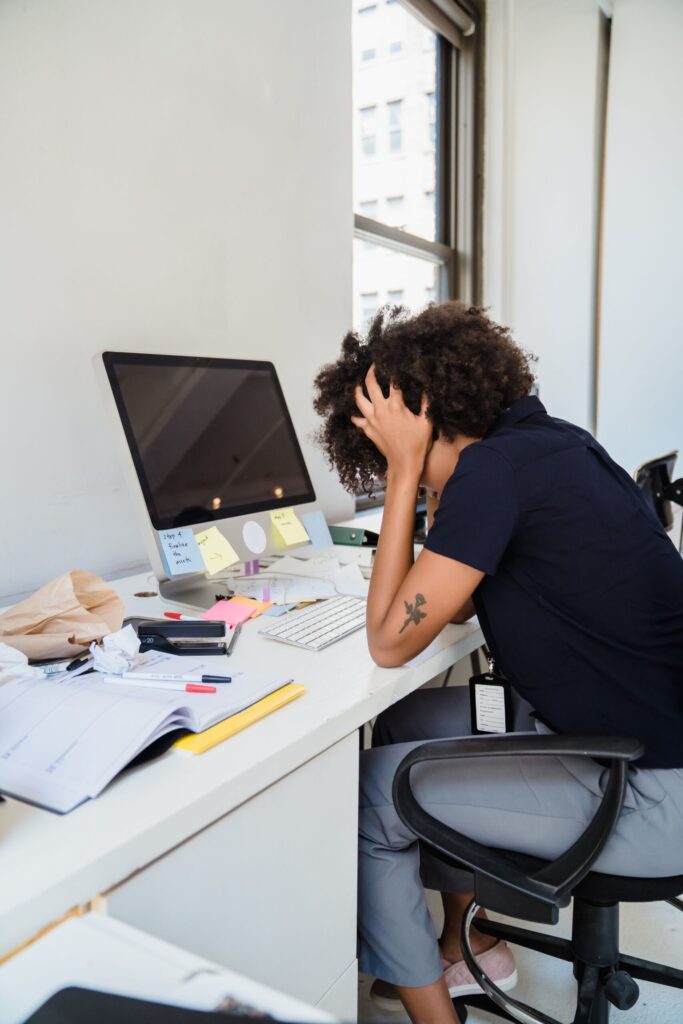
I have worked with a lot of people who sit for 8 or more hours a day. Almost all of them have the same four problems — lower back pain, tight hips, rounded shoulders and weak glutes. The frustrating part is that all four are almost entirely preventable with less than 10 minutes of targeted exercise per day.
These are not generic exercises picked from a list. They are specifically chosen to reverse the exact physical damage that desk work causes — based on the biomechanics of prolonged sitting and the muscles that suffer most from it.
Maya — 38F, Desk Worker, 8 Hours Per Day
Maya had chronic lower back pain for three years. She had tried painkillers, a new chair and even a standing desk — none of it made a lasting difference. When she started doing these five exercises every morning before work her pain reduced by over 70 percent within three weeks. She has not taken a painkiller for back pain since.
What Sitting All Day Actually Does to Your Body
Most people think back pain from sitting is just inevitable. It is not. It is the predictable result of specific muscles weakening and shortening from being held in the same position for hours at a time.
Glutes switch off
Sitting compresses the glutes for hours — they stop firing effectively. Weak glutes force the lower back to compensate for every movement you make.
Hip flexors shorten
Hip flexors are held in a shortened position all day. Tight hip flexors tilt the pelvis forward — compressing the lumbar spine and causing chronic lower back pain.
Upper back weakens
Leaning forward toward a screen rounds the shoulders and lengthens the upper back muscles. Over time they become too weak to hold good posture.
Circulation slows
Sitting for long periods reduces blood flow to the legs. The calf muscles — which act as a second heart pumping blood back upward — stop working effectively.
Source: Biswas A, et al. Sedentary time and its association with risk for disease incidence, mortality, and hospitalization in adults. Ann Intern Med. 2015. NIH/PubMed.
Glute Bridge
Fixes: Lower back pain, weak glutes, anterior pelvic tilt
The glute bridge is the single most important exercise for desk workers. It directly activates the glutes — which sitting compresses and deactivates — and immediately reduces lower back strain by teaching your body to use your glutes rather than your lower back for movement.
How to do it:
- Lie on your back with knees bent and feet flat on the floor hip-width apart
- Arms flat by your sides palms facing down
- Press through your heels and squeeze your glutes as you lift your hips toward the ceiling
- Hold at the top for 2 seconds — make sure you are squeezing your glutes hard not just pushing with your legs
- Lower slowly back to the floor
- Repeat without letting your hips fully rest between reps
Hip Flexor Stretch — Kneeling Lunge
Fixes: Tight hip flexors, anterior pelvic tilt, lower back compression
Every hour of sitting shortens your hip flexors — the muscles that connect your spine to your thighs. Tight hip flexors are one of the leading causes of lower back pain in desk workers and they respond remarkably quickly to consistent stretching.
How to do it:
- Kneel on one knee with the other foot forward — like a proposal position
- Keep your torso upright — do not lean forward
- Gently push your hips forward until you feel a stretch in the front of the hip of your back leg
- Hold this position for 60 seconds — breathe slowly and let the muscle relax into the stretch
- Switch sides and repeat
- Do both sides twice
Chin Tucks
Fixes: Forward head posture, tech neck, neck and shoulder pain
For every centimetre your head moves forward of your shoulders an additional 4.5kg of pressure is added to your cervical spine. Most desk workers carry their head 3 to 5 centimetres forward — adding 13 to 22kg of extra pressure to their neck every single day.
How to do it:
- Sit or stand with your back straight and shoulders relaxed
- Looking straight ahead pull your chin directly backward — like you are trying to make a double chin
- Do not tilt your head up or down — the movement is purely horizontal
- Hold for 3 seconds feeling a gentle stretch at the base of your skull
- Release and return to starting position
- Repeat 10 times
Band Pull Aparts
Fixes: Rounded shoulders, weak upper back, shoulder impingement risk
Desk workers spend hours reaching forward — typing, using a mouse, scrolling a phone. This constant forward motion strengthens the chest and front of the shoulders while the upper back becomes progressively weaker. Band pull aparts directly fix this imbalance.
How to do it:
- Hold a resistance band with both hands at chest height — arms straight out in front
- Keep your arms straight throughout the movement
- Pull the band apart by moving both hands outward to your sides simultaneously
- Continue until your arms are fully extended to each side and the band touches your chest
- Squeeze your shoulder blades together hard at the end position
- Slowly return to the starting position
Calf Raises
Fixes: Poor circulation, leg swelling, fatigue, blood clot risk
Your calf muscles are sometimes called your body’s second heart — they pump blood back up from your lower legs against gravity. When you sit all day this pump stops working and blood pools in your legs causing swelling fatigue and in serious cases increased clotting risk.
How to do it:
- Stand with feet hip-width apart — hold a wall or desk for balance if needed
- Rise up slowly onto the balls of your feet — as high as you can go
- Hold at the top for 1 second
- Lower slowly back to the floor — take 3 seconds on the way down
- Repeat without bouncing at the bottom
- For a harder version do single leg calf raises — one foot at a time
The Complete 10 Minute Daily Routine
Do this every morning before work or during your lunch break. No gym required.
| Exercise | Sets x Reps | Time | Equipment |
|---|---|---|---|
| Glute bridge | 3 x 15 | 2 min | None |
| Hip flexor stretch | 2 x 60 sec each side | 4 min | None |
| Chin tucks | 3 x 10 | 1 min | None |
| Band pull aparts | 3 x 20 | 2 min | Resistance band |
| Calf raises | 3 x 20 | 1 min | None |
When to Do This Routine
- Before work — activates your glutes and loosens your hips before sitting down. This is the most effective time.
- Lunch break — breaks up the sitting and resets your posture for the afternoon
- After work — undoes the damage of the day before it becomes chronic overnight
- Every 30 minutes at your desk — chin tucks and calf raises can be done without leaving your chair or desk
5 Additional Tips for Desk Workers
- Set a timer every 30 minutes — stand up and do 10 chin tucks and 10 shoulder rolls every time it goes off
- Position your monitor at eye level — if your screen is below eye level you will always be looking down — compressing your cervical spine all day
- Sit at the back of your chair — not on the edge — use the backrest to support your lumbar spine
- Walk during phone calls — any call that does not require you to type is an opportunity to stand and move
- Drink more water — being well hydrated forces you to get up and walk to the bathroom regularly — built in movement breaks
Research reference: A meta-analysis published in the Journal of Orthopaedic and Sports Physical Therapy found that targeted hip flexor and glute strengthening exercises produced significant reductions in non-specific lower back pain — with effects comparable to physiotherapy intervention in mild to moderate cases.
Source: Reiman MP, et al. Gluteal muscle activation during common therapeutic exercises. J Orthop Sports Phys Ther. 2012. NIH/PubMed.
Know How Many Calories You Burn at Your Desk?
Most desk workers burn far fewer calories than they think. Use our free Calorie Burn Calculator to find out your daily burn — and how much these exercises add.
Calculate My Calorie Burn Free →⭐ Recommended for this routine:
Resistance Band Set — View on Amazon →📖 Related Articles
References
- Biswas A, et al. Sedentary time and its association with risk for disease incidence mortality and hospitalization in adults. Ann Intern Med. 2015. NIH/PubMed.
- Reiman MP, et al. Gluteal muscle activation during common therapeutic exercises. J Orthop Sports Phys Ther. 2012. NIH/PubMed.
Disclaimer: Maya is a fictional character created for educational purposes. This article is for informational purposes only and does not constitute medical advice. Always consult a qualified healthcare professional or physiotherapist before starting a new exercise programme — particularly if you are experiencing pain or have an existing injury.